




The Professional Email Matters in digital interaction. Trust is the most expensive commodity in business. It takes years to build, but it can be lost in a single click. In an era where phishing scams and “fly-by-night” operations are rampant, customers are more sceptical than ever. They look for subtle cues to verify that a business is legitimate before they hand over their credit card details or sign a contract.
One of the loudest signals you send is your email address. Here is why switching from a generic provider (like Gmail or Yahoo) to a professional, branded email is essential for building unshakeable brand trust.
Explaining Professional Email Matters
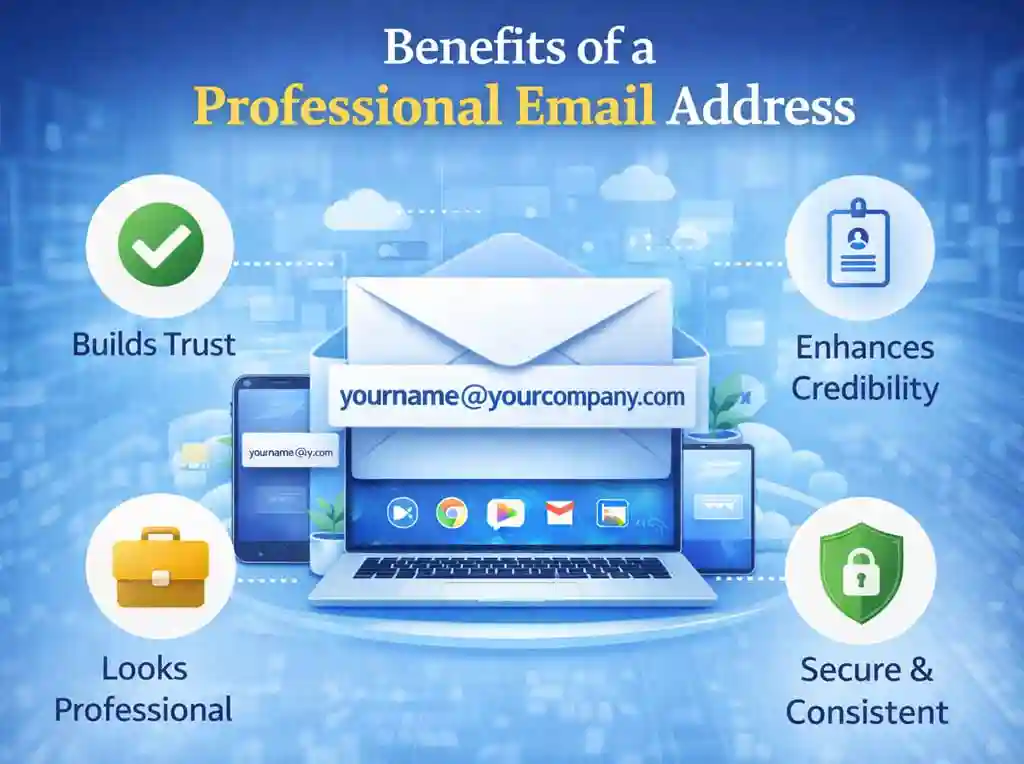
1. The Psychology of Legitimacy
When a customer receives an email from ceo.startup55@gmail.com, Their subconscious immediately asks a question: “Is this a real company, or just a person with a laptop?”
A professional email address (name@yourbrand.com) answers that question instantly. It signals:
-
Permanence: You have invested in your infrastructure. You aren’t going to disappear tomorrow.
-
Verification: Domain names require registration and ownership. It proves you are who you say you are.
-
Accountability: A branded email suggests a structured organisation stands behind the message, not just an anonymous individual.
2. Protection Against Phishing and Impersonation
Trust isn’t just about “looking good”; it’s about safety.
Free email accounts are the preferred tool of scammers because they are anonymous and disposable. If you use a free account for business, you are essentially using the same tools as the bad guys. This makes it incredibly difficult for your clients to distinguish a real invoice from a fake one.
Professional email hosting (like Google Workspace or Zoho Mail) allows you to authenticate your domain. This tells your client’s email server, “Yes, this email actually came from Namastu.com.” It protects your clients from being scammed by impersonators, which protects your reputation.
3. Brand Consistency is Key to Recall Profession Email
Marketing is about repetition. The more a client sees your brand name, the more they trust it.
Every time you send an email from a custom domain, you are reinforcing your brand name.
-
Generic Email:
john.smith1980@gmail.com-> The client remembers “John,” but forgets the business. -
Professional Email:
john@namastu.com-> The client remembers “Namastu” every time they see the sender line.
This subtle repetition builds “Top of Mind” awareness. When they eventually need your services, they won’t search for “John”; they will search for your brand.
4. The “Spam Folder” Stigma in Non-Professional Email
Nothing erodes trust faster than a business proposal ending up in the Junk folder.
Aggressive spam filters at large corporations often flag emails from free providers as “low priority” or “potential spam.” If your urgent contract update goes to spam, you don’t just lose time—you look incompetent. A professional email ensures high deliverability, signalling to your client that you are a serious player whose communication deserves the primary inbox.
The Trust Scorecard: Generic vs. Professional Email
| Feature | Generic Email (@gmail.com) | Professional Email (@yourbrand.com) |
| First Impression | Hobbyist / Temporary | Established / Professional |
| Security Perception | High Risk (could be anyone) | Verified Source |
| Brand Impact | Promotes Google/Yahoo | Promotes Your Business |
| Client Confidence | “I hope this is real.” | “I know who this is.” |
Conclusion
Your professional email address is often the very first interaction a potential client has with your brand. It is your digital handshake.
You wouldn’t show up to a boardroom meeting in pyjamas because it would signal a lack of respect for the occasion. Similarly, using a free email address signals a lack of investment in your business identity. Upgrading to professional email is a small technical change that yields a massive return in customer confidence.